The pharmaceutical industry consistently relies on nitrogen gas for a wide range of uses, including everything from mixing raw materials, to cryogenic grinding (a process using liquid nitrogen to create ultra-fine, uniform particles), to purging oxygen from the packaging.
Ved Firms’ nitrogen gas generators for pharmaceutical production produce an endless supply of high purity, pharmaceutical grade nitrogen gas at low cost. Our nitrogen system is compliant with the requirements for use in the pharmaceutical industry. The production process is validated and controlled to meet pharmacopeia requirements.
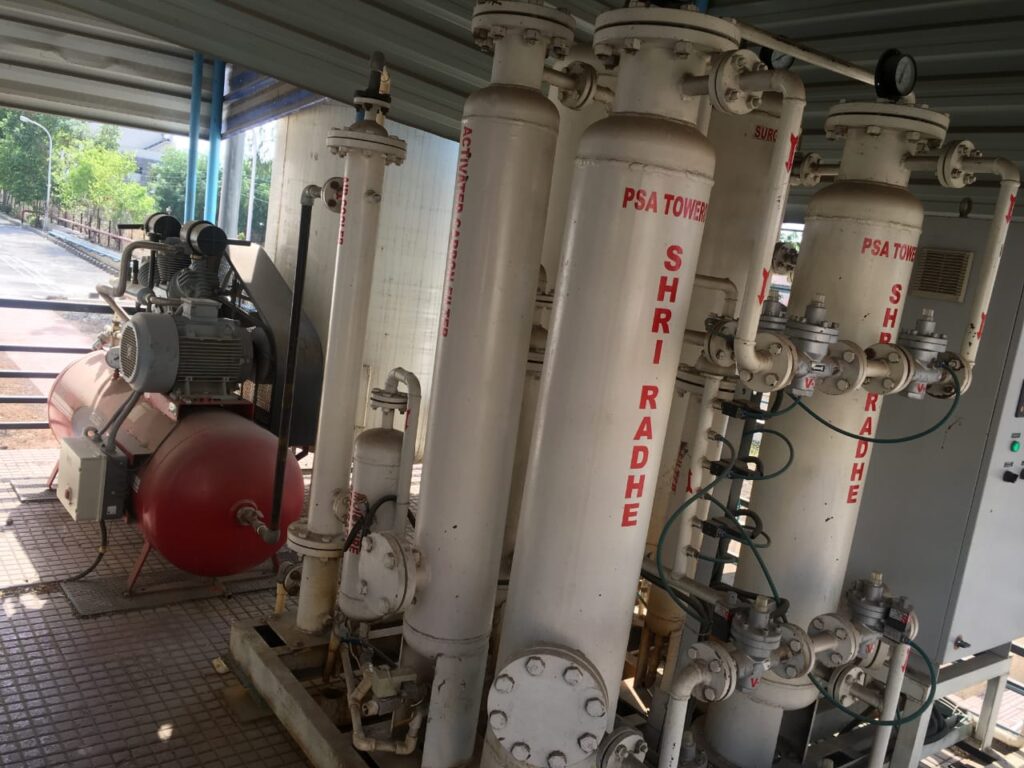

Ved Firms is a professional company engaged in the manufacturing of nitrogen generation equipment and conforming to all the above requirements. It is also a service-oriented company dealing with maintenance, repair, technical renovation, and sales of accessories for various nitrogen generators.
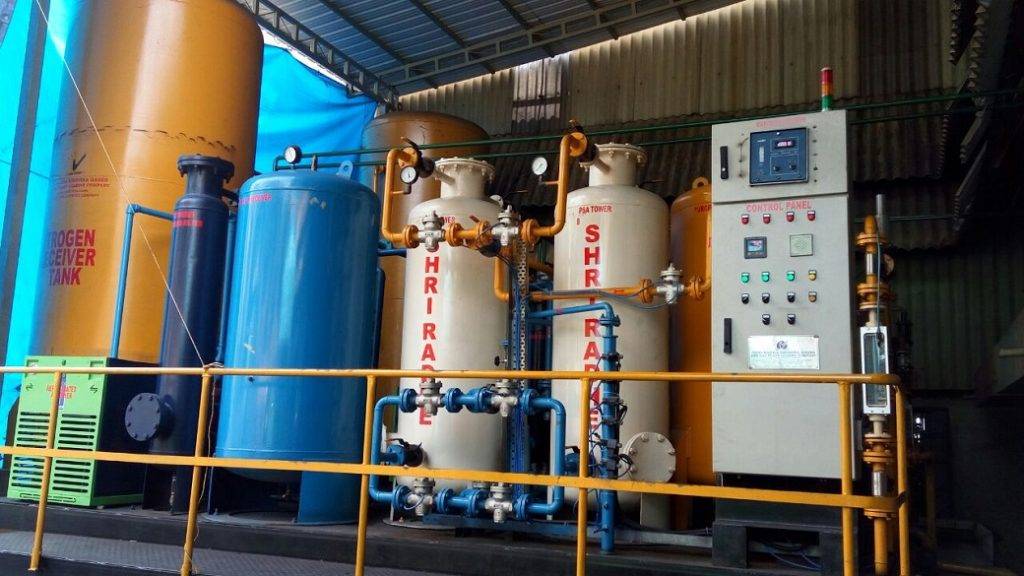
Ved Firms offers an option of compact, easily transportable membrane nitrogen systems or PSA generators with higher nitrogen production capacities and higher purity levels.
Give us a call to discuss how Ved Firms can help your business.
Ved Firms, Thakurdas Gin Factory, Mondha Road, Chatrapati Sambhaji Nagar, Maharashtra – 431001
Nitrogen can be used for raw-material mixing, tank and equipment purging, packaging, blanketing, solvent protection and selected cryogenic grinding applications. The required nitrogen quality depends on the specific pharmaceutical process.
Nitrogen can be used to displace oxygen from pharmaceutical packaging before sealing. This can help protect oxygen-sensitive products and reduce oxidation during storage.
Nitrogen can displace oxygen from process equipment, containers and packaging environments. Reducing oxygen exposure can help protect sensitive pharmaceutical materials and support controlled manufacturing conditions.
Nitrogen can provide a controlled atmosphere during selected raw-material mixing processes. It can help reduce exposure to oxygen and moisture where the material or formulation requires an inert environment.
Liquid nitrogen can be used as a cryogenic cooling medium during grinding to reduce the temperature of materials and support fine, uniform particle production. The appropriate process depends on the material and pharmaceutical application.
Yes. Nitrogen can be used in selected powder-processing applications where an inert or low-oxygen atmosphere is required. The required gas purity and flow depend on the material and process.
High-purity nitrogen is important because pharmaceutical processes may require controlled gas quality to avoid contamination and unwanted reactions. The required purity should be determined according to the specific process and applicable pharmaceutical standards.
The required nitrogen purity depends on the application, product, equipment and applicable quality requirements. VedFirms’ page states that pharmaceutical production generally requires nitrogen in the range of 99% to 99.99%, but the exact specification should be validated for the individual process.
Nitrogen reduces the presence of oxygen around suitable pharmaceutical products and processes. This can help minimize oxidation and protect materials that are sensitive to oxygen exposure.
Yes. Pharmaceutical facilities can use on-site PSA or membrane nitrogen generators to produce nitrogen at the point of use. The system can be selected according to required purity, flow rate, pressure and process requirements.
An on-site nitrogen generator can provide a continuous nitrogen supply, reduce dependence on external gas deliveries and simplify nitrogen supply management. It can also be configured for the purity and flow requirements of the pharmaceutical facility.
The choice depends on required nitrogen purity, flow rate, pressure, available space and process requirements. PSA systems are generally suitable when higher nitrogen purity is required, while membrane systems can be considered for applications with different purity requirements.
Nitrogen demand depends on the number of applications, production capacity, packaging requirements, equipment, operating pressure and production hours. A process assessment is recommended to determine the required nitrogen flow rate and generator capacity.